- My first iteration or prototype includes a rough draft of the survey I will be using and a sample drawing of my own visualization of mental health. The drawing uses the medium, pencil and oil pastel, I will be planning on using for the actual final product. The drawing is also the same size I will be drawing on for later iterations.
- Five questions: not good or bad, but how can they add to the project
- What are your thoughts on art as a medium of expression for the topic of this project?
- Overall, art is an interpretative and is very open ended which allows the viewer to each have a unique interpretation of the piece. Especially since mental health is a very personal experience, it makes sense for art which is in itself is subjective to portray these experiences. Art is also one of the ways to accurately capture feeling and experiences for someone who struggles with mental health issues. Moreover, it is powerful in expressing things that words often cannot. Words often lack the scope or intensity to describe experiences especially related to mental health and art does not have any of these restrictions.
- Are there things I can add to the background of the survey to help the person taking it?
- The background definitely gives a good scope of what the project is about for the person taking the survey, however, it would be helpful to define terms used later in the survey. Define terms such as mental health and Asian American. It would also be helpful to provide the survey taker an example of the survey response so they can better understand what you are asking. You could possibly add your motivation behind this project and explain a little further as to why it is important. Adding these modifications may give more clarification to the person taking it.
- What additional suggestions or thoughts do you have in terms of the questions asked in the survey?
- Being more clear about the question regarding visually describing mental health. Narrowing it down to one strong experience or memory would be more clear and leave it less open ended to the survey taker. Also add whether the person’s heritage as an Asian American has impacted the way they view mental health then ask how versus just asking how it has impacted their story since it could be unrelated. It would also be important to ask whether they think mental health is an important topic in general. If the person taking it doesn’t see it as important, it would affect the results and the person may choose to answer. Lastly, emphasize the visual aspect of the question, since that is the main aspect of your project.
- How do you think the drawings should be organized on the board and why?
- There could be a couple of ways to organize depending on the types of responses you get. Responses that cover a lot of mental illness experiences could be categorized or you could make a spread of both negative and positive experiences since mental health is not defined but a range. You could also sort them based on a color scheme. On the other hand, not categorizing them may add to the project display as a whole. Since the goal of your project is to simply draw attention to the topic of mental health and not finding differences between groups of people, having people see your display as a whole may have a much bigger impact rather than if they were categorized. In addition, having all of these different narratives mixed up could further emphasize the problem of lack of awareness in the Asian American community and that Asian Americans as a whole should be active about it.
- How effective do you think my first drawing is in terms of conveying a story?
- The drawing definitely conveys a lot of emotion which is really powerful in sending a message. It is really artful and captures a certain feeling and aura. Moreover, it conveys a story even without any words or description provided. As a viewer, there is definitely room for empathy and a level of understanding to the story behind the piece. Additionally, through this piece there is a transition of space and emotions.
- What are your thoughts on art as a medium of expression for the topic of this project?
- Some changes I will be making for the next iteration is to have clearer wording for some of the survey questions. I will be asking specifically for one strong experience with mental health, either positively or negatively. I will also be adding the question simply asking the survey taker about whether they think mental health is important or not. Additionally, I will be providing examples for both of these experiences to give a clearer idea to the participant of what I am asking as well as a sample of responses. As for the background, I will be elaborating about the motivation behind the project and its importance to me as the creator as well as why it is important in general. I will be creating a plan for the way the art pieces will be displayed on the board. I won’t necessarily have labeled categorizations but simply placements of pieces and their respective descriptions to see how big the board will be. I will also be refining the first drawing I created by putting on the actual paper I plan to use versus the printer paper I opted for in the first iteration.
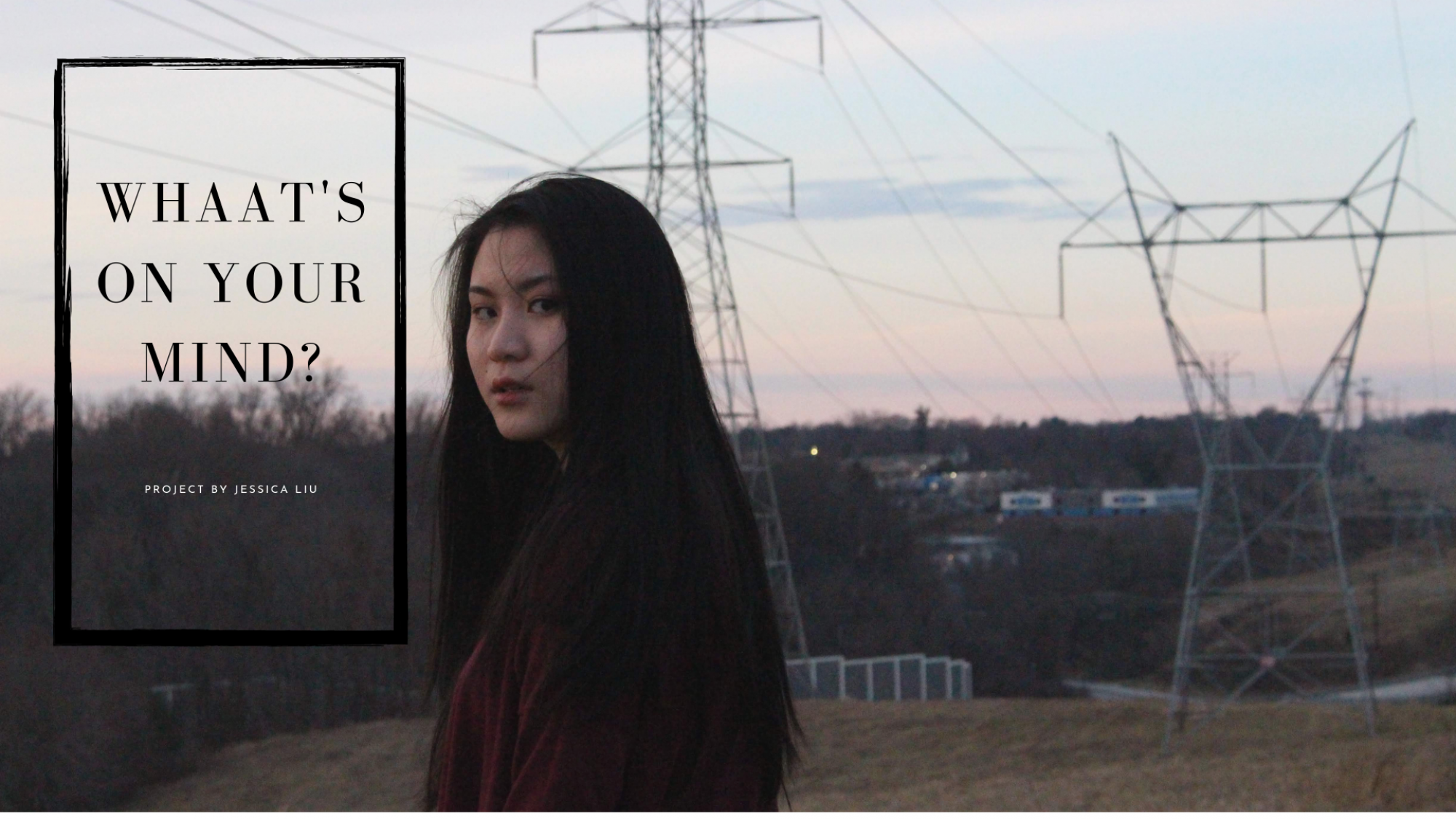
 WhAAT's on your mind?